
You’ve tried the strips. Maybe the whitening toothpaste too. And yet every time you smile in a photo, your teeth still look a shade or two duller than you’d like. If you’ve been searching for teeth whitening in Des Plaines, IL and wondering whether professional treatment is actually worth it — or whether another box from the drugstore will finally do the trick — this guide is for you.
At Bright Dental in Des Plaines, we see patients every week who’ve spent months and real money on over-the-counter whitening products with disappointing results. Understanding why those products underperform, and what professional whitening actually does differently, helps you make a smarter decision for your smile and your budget.
Let’s break it all down honestly.
Why Do Teeth Become Discolored in the First Place?
Before choosing any whitening treatment, it helps to understand what’s actually causing your teeth to look dull or yellow. Not all discoloration is the same — and not all whitening products treat every type.
Extrinsic stains sit on the outer surface of the enamel. These are caused by food and drinks like coffee, tea, red wine, and dark berries, as well as tobacco use. Extrinsic stains are the most responsive to whitening treatments because they’re on the surface.
Intrinsic stains develop inside the tooth itself — within the dentin layer beneath the enamel. These are caused by aging, certain antibiotics (particularly tetracycline taken during childhood), excessive fluoride exposure during tooth development, or trauma to a tooth. Intrinsic stains are significantly harder to treat and often require professional intervention to see any meaningful improvement.
Age-related discoloration is a combination of both — enamel thins naturally over time, allowing the naturally yellow dentin beneath it to show through more prominently, while years of surface staining accumulate simultaneously.
Knowing your stain type matters because it tells you which treatment will actually work.
Store-Bought Whitening Products: What They Can and Cannot Do
Walk into any pharmacy in Des Plaines and you’ll find an entire aisle dedicated to whitening products — strips, trays, pens, toothpastes, and rinses. Here’s an honest look at what each one does.
Whitening Toothpastes
Whitening toothpastes work primarily through mild abrasion — they physically scrub surface stains off the enamel rather than chemically bleaching the tooth. Some contain low concentrations of hydrogen peroxide as well. The result is a very mild brightening effect for light surface stains, but they cannot change the actual color of your teeth or address staining that has penetrated the enamel.
Whitening Strips
Whitening strips contain hydrogen peroxide — typically at concentrations between 6% and 10%. Applied daily for one to two weeks, they can produce a noticeable improvement for mild to moderate extrinsic staining. However, they have significant limitations. The strips are flat, meaning they don’t conform to the natural curves and contours of your teeth. This results in uneven whitening — the flat front surfaces lighten while the edges and areas near the gumline remain darker. They also carry a higher risk of gum irritation when the strip contacts soft tissue.
Over-the-Counter Trays
Generic whitening trays from the drugstore use a similar peroxide concentration to strips but attempt to deliver it more evenly across the tooth surface. The problem is fit — these trays are not custom-made for your mouth. Ill-fitting trays allow the whitening gel to seep out and contact the gums, increasing sensitivity and irritation while reducing the concentration of gel actually in contact with the teeth.
Whitening Pens and Rinses
These deliver such a low concentration of active whitening ingredient that clinical results are minimal at best. They are better suited as short-term maintenance tools than primary whitening treatments.
The honest bottom line on store-bought products: They can brighten mild surface stains by one to two shades when used consistently. For anything beyond that — deeper staining, uneven discoloration, or a genuinely transformative result — they consistently fall short.
Professional Teeth Whitening in Des Plaines: What Actually Happens
Professional teeth whitening at Bright Dental uses pharmaceutical-grade hydrogen peroxide gel at concentrations significantly higher than anything available over the counter — typically between 25% and 40%. This higher concentration, combined with precise application by a trained provider, produces dramatically better results in a fraction of the time.
Here is exactly what your appointment looks like.
Step 1 — Pre-Whitening Assessment
Your appointment begins with a quick examination of your teeth and gums. We check for existing cavities, gum sensitivity, or dental restorations like crowns and veneers — because whitening gel affects natural tooth enamel but does not change the color of restorations. Knowing this in advance prevents uneven results and sets accurate expectations.
We also take note of your current shade using a shade guide, so you can see the measurable difference after treatment.
Step 2 — Gum Protection
Professional whitening uses a protective barrier — either a rubber dam or a light-cured resin — applied carefully along the gumline before any whitening gel is used. This is one of the most important differences between in-office and at-home whitening. Your gum tissue is fully protected throughout the entire procedure, dramatically reducing sensitivity and irritation.
Step 3 — Gel Application
The professional-grade whitening gel is applied evenly across all visible tooth surfaces with precision — including the curved edges and areas near the gumline that strips and generic trays consistently miss. The gel is left on the teeth for a set period and may be reapplied in multiple rounds during the same appointment.
Step 4 — Results Assessment
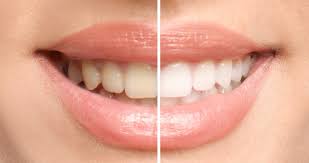
At the end of your appointment, we compare your new tooth shade to where you started. Most patients see a lift of four to eight shades in a single appointment — a result that would take weeks of daily strip use to even attempt, and that strips rarely actually achieve.
In-Office vs. Store-Bought: Side-by-Side Comparison
| Factor | Store-Bought | Professional In-Office |
|---|---|---|
| Peroxide concentration | 6–10% | 25–40% |
| Shade improvement | 1–2 shades | 4–8 shades |
| Treatment time | 2–4 weeks daily use | Single 60–90 min appointment |
| Gum protection | None | Full protective barrier |
| Even coverage | Inconsistent | Precise, full coverage |
| Sensitivity management | None | Desensitizing agents used |
| Intrinsic stain treatment | Minimal | Significantly more effective |
| Cost | $30–$80 per kit | Higher upfront, far better ROI |
| Results longevity | Weeks | 12–24 months with care |
How Long Do Professional Whitening Results Last?
This is one of the most common questions we hear from patients at our Des Plaines clinic. The honest answer is that it depends on your lifestyle habits — but professional whitening results generally last twelve to twenty-four months before a touch-up is needed.
To maximize the longevity of your results:
- Rinse your mouth with water immediately after consuming coffee, tea, red wine, or dark-colored foods
- Use a whitening toothpaste for maintenance — at this stage, it’s doing its intended job
- Avoid smoking or tobacco products, which are among the fastest ways to re-stain teeth
- Schedule your professional touch-up before staining becomes significant again — lighter maintenance treatments are more effective than waiting until discoloration is heavy
Is Teeth Whitening Safe?
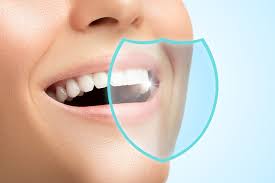
Professional teeth whitening performed by a dental provider is safe and well-studied. The most common side effect is temporary tooth sensitivity, which typically resolves within 24 to 48 hours after treatment. At Bright Dental, we use desensitizing agents before and after whitening to minimize this experience.
Whitening is not recommended for patients who are pregnant or breastfeeding, have active tooth decay or gum disease, have severely sensitive teeth or exposed dentin, or are under the age of 16.
Patients with dental restorations such as crowns, veneers, or bonding should know that these materials do not respond to whitening gel. If you have visible restorations on your front teeth, we will discuss this during your assessment and set realistic expectations for how your results will look.
Who Is a Good Candidate for Teeth Whitening in Des Plaines?
You are likely a strong candidate if you:
- Have healthy teeth and gums with no untreated decay or active gum disease
- Are unhappy with the color of your natural teeth due to surface staining from food, drinks, or tobacco
- Have tried over-the-counter products without satisfying results
- Want a fast, noticeable improvement before a special event — a wedding, reunion, job interview, or milestone celebration
- Are interested in a smile makeover and want to start with the most non-invasive, reversible step first
Teeth Whitening and Your Other Cosmetic Goals
Teeth whitening is often the starting point for patients who are considering broader cosmetic improvements. For patients exploring veneers or dental bonding for chipped or shaped teeth, we typically recommend completing whitening first — so that the shade of your restorations can be matched to your brightest, whitest natural teeth rather than to a dull baseline.
If you are experiencing tooth sensitivity alongside discoloration, it’s important we assess the underlying cause before proceeding with whitening, as some sensitivity issues indicate enamel erosion or exposed dentin that requires treatment first.
Frequently Asked Questions About Teeth Whitening in Des Plaines
How white will my teeth actually get? Results vary based on your starting shade, the type of staining you have, and how well you follow post-treatment care guidelines. Most patients see a lift of four to eight shades. We show you the shade guide before and after so the improvement is measurable, not just subjective.
Will whitening work on my crowns or veneers? No — whitening gel works on natural tooth enamel only. Restorations like crowns, veneers, and bonding will not change color. If your restorations are on visible front teeth, we discuss this fully during your assessment.
How soon can I eat and drink normally after whitening? We recommend avoiding dark-colored foods and drinks — coffee, tea, red wine, tomato sauce — for at least 48 hours after whitening. This is called the “white diet” window, and it significantly impacts how long your results last.
Can I whiten my teeth if I have sensitive teeth? Sensitivity doesn’t automatically disqualify you. We assess the cause of your sensitivity first. Mild sensitivity can often be managed with desensitizing agents used before and after treatment. Severe sensitivity or exposed dentin may require addressing the underlying cause before whitening.
How often can I get professional whitening? Most patients benefit from a touch-up every twelve to eighteen months. Whitening more frequently than your dentist recommends can lead to enamel weakening and increased sensitivity over time.
Ready to Whiten Your Teeth in Des Plaines? Here’s Your Next Step
If you’ve been settling for a smile that’s a few shades duller than you’d like, professional teeth whitening in Des Plaines, IL at Bright Dental gives you a fast, safe, and dramatically more effective result than anything available in a box.
Dr. Furrukh Ashraf and our team are here to answer your questions, assess your candidacy, and give you a clear picture of what your results will look like — before you commit to anything.
Proudly serving Des Plaines, Park Ridge, Rosemont, Mount Prospect, Niles, and Elk Grove Village. Se habla español.